
Zagreb, 11 June 2025 – After half a century, the Republic of Croatia once again had the great honour of hosting the annual congress of the Central European Diabetes Association (CEDA). The 2025 CEDA Congress was held in Zagreb from 12 to 14 June 2025 at the Westin Hotel. It is the most important annual meeting of this prominent association and one of the three largest European congresses dedicated to diabetology.
The society was founded in 1969 as the Federation of International Danube Countries on Diabetes (FID – Federation International Danube) with the aim of strengthening exchange and cooperation between diabetologists from Western and Eastern Europe. It was later renamed the Central European Diabetes Association (CEDA).
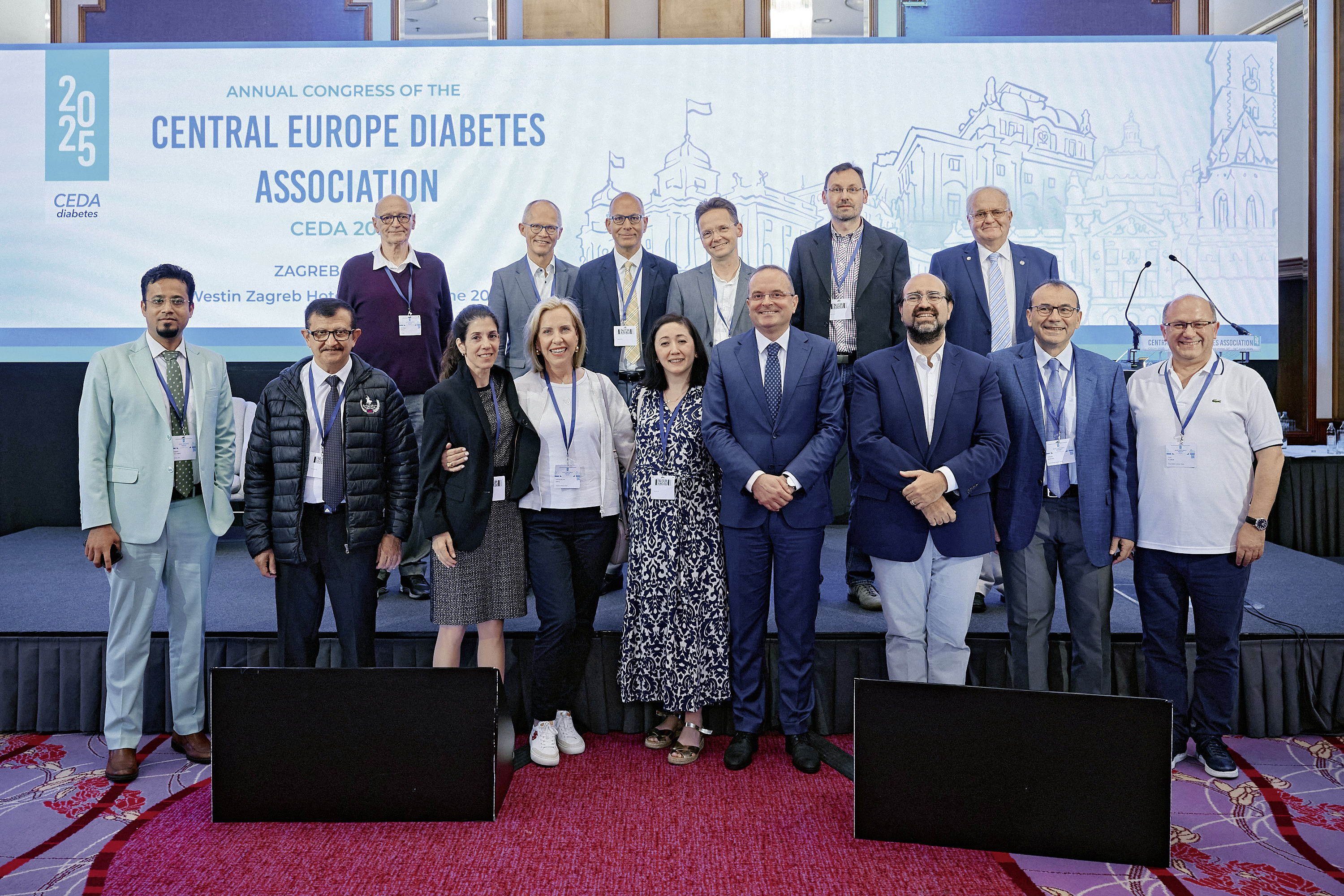 A.T.I. d.o.o. | Fig. 1: Impression from the last day of the CEDA Congress in Zagreb with the congress president, members of the CEDA board and other congress attendees.
The Society‘s main mission is to promote science and improve the care of people with diabetes. Even after the fall of the Iron Curtain in 1989, CEDA continued to unite experts from an increasing number of countries across the wider region. It is a non-profit organisation dedicated to promoting scientific exchange and cooperation between all diabetes professional societies and diabetologists in Central and Southeastern Europe. After the first congress in Vienna in 1969, the congresses of FID, later CEDA, were held in Budapest in 1971, Salzburg in 1973 and Dubrovnik in 1975. This enabled a small and undoubtedly privileged group not only to engage in intensive medical discussions, but also to gain a better understanding of diabetes care in the host countries.
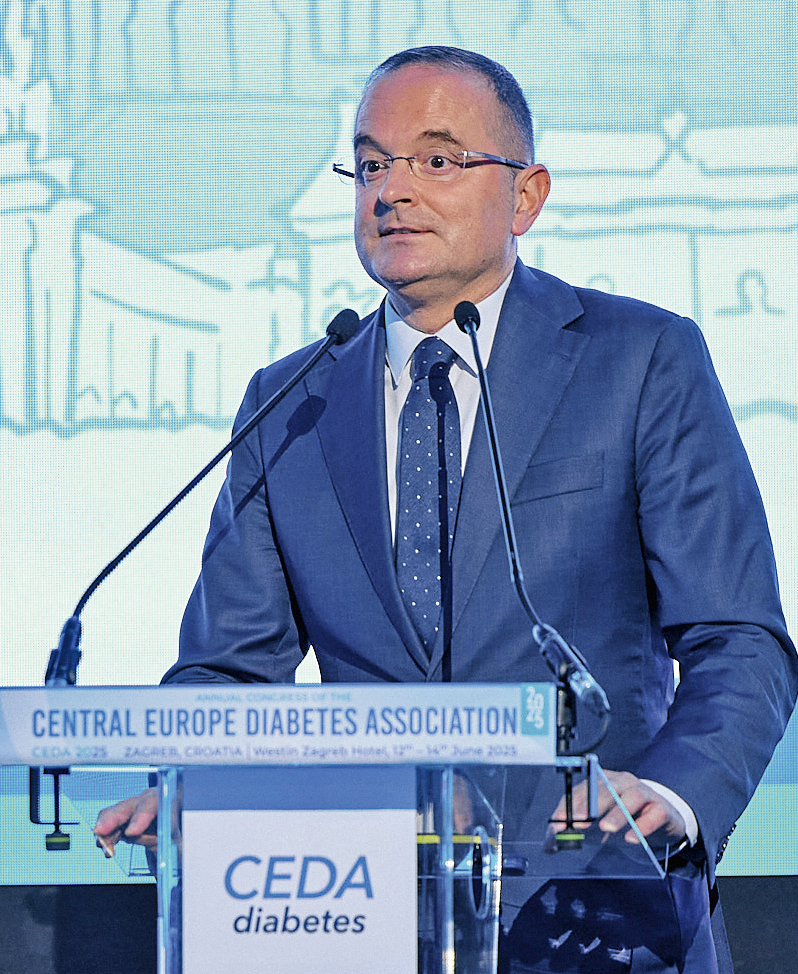
It is worth noting that the president of the congress in Dubrovnik in 1975 was the founder of Croatian diabetology, Academician Zdenko Škrabalo. The honour of presiding over this year‘s congress in Zagreb went to Professor Dr. Dario Rahelić, Head of the University Clinic for Endocrinology, Diabetes and Metabolic Diseases Vuk Vrhovac at the Merkur Clinical Hospital in Zagreb and President of the Croatian Society for Diabetes and Metabolic Diseases of the Croatian Medical Association. We are proud that in the 1970s, the Croatian model of organising diabetes care served the World Health Organization as an example for establishing similar models in other countries, which made Academician Škrabalo one of the most important and well-known diabetologists in the world.
This year‘s congress in Zagreb brought together leading experts in the field of diabetology to exchange the latest scientific findings, clinical research and treatment recommendations for sugar diseases, in order to ensure better healthcare quality for people with diabetes across Europe. The scientific programme covered numerous important topics, and participants had an unique opportunity to listen to and interact with prominent experts and researchers from across Europe and around the world and to acquire new knowledge in the field of diabetology. Lecturers and participants came from approximately thirty countries, which confirms the great importance of this gathering for the entire medical community. All this year‘s abstracts have been published in the official CEDA journal "Diabetes, Metabolism, and the Heart".
An important task for CEDA and its member countries is certainly the implementation of new knowledge into clinical practice, with the ultimate goal of providing the most modern medical approach to patients with diabetes. CEDA supports young scientists through a medical exchange programme for young doctors, which it financially supports with the aim of exchanging experiences, promoting knowledge and establishing professional contacts. This year, CEDA awarded ten travel scholarships for the best abstracts submitted by young scientists under the age of 40. Recipients of these scholarships also received free registration for the congress.
By awarding the organisation of this congress, the Central European Diabetes Association (CEDA) gave great recognition to Croatian diabetology, and included the city of Zagreb in the list of host cities for the CEDA congress.
All additional information can be found on the official congress website: www.ceda2025.com.
|
|
Abstracts from the Congress of the Central European Diabetes Association (CEDA), June 12 – 14 2025, Zagreb (Croatia)
The 2025 CEDA Annual Congress was organised by Professor Dr. Dario Rahelic in Zagreb, Croatia. More than 250participants from approximately 30 countries attended the event. Speakers from across Europe addressed a wide range of topics in diabetology and related clinical conditions, with the aim of exchanging the latest scientific knowledge, clinical research findings, and treatment recommendations to improve healthcare outcomes for people living with diabetes throughout Europe. This year, CEDA awarded ten travel scholarships for the best abstracts submitted by young scientists under the age of 40. All accepted abstracts are published in this issue of Diabetes, Metabolism, and the Heart.
A01: Rare causes of glycosuria
Boris Ilic, Plava Medical Group, Tuzla, Bosnia & Herzegovina
Objective: We would like to report on rare causes of glycosuria. A 25-year-old male was referred with suspicion of diabetes due to the persistent presence of glucose in the urine. The patient was asymptomatic and had no risk factors for diabetes. After a detailed clinical examination, we ruled out diabetes mellitus. By looking into his earlier medical documentation, we noticed that isolated glycosuria persisted in him on more findings than his 16 year, and we concluded that it was probably familial renal glycosuria.
Topic Review: Familial renal glycosuria is an inherited disorder resulting in glucose excretion in the urine despite normal blood glucose concentrations. It is most commonly due to mutations in the SLC5A2 gene coding for the glucose transporter SGLT2 in the proximal tubule. Renal glycosuria occurs in about 1/33,000 people in the general population and affects males and females equally. Most patients are asymptomatic. Increased urination, a tendency to urinary tract infections, increased thirst, or possibly dehydration during pregnancy or inability to replace fluids may occur. Isolated renal glucosuria is benign; no treatment is necessary.
A02: Decoding Diabetic Kidney Disease: Feature Attribution with Explainable Artificial Intellect in T2DM Patients
Daria Iepishyna, D. F. Chebotarev Institute of Gerontology of the National Academy of Medical Sciences of Ukraine, Kyiv, Ukraine
Co-authors: Yanina Rebrova, Yanina Saienko, Dmytro Krasnienkov, Roman Kirilenko, Boris Mankovsky
Background and Aim: Chronic kidney disease (CKD) is a major complication of type 2 diabetes mellitus (T2DM), significantly impacting morbidity and mortality. The application of artificial intelligence (AI), particularly Explainable AI (XAI), offers new opportunities for predicting diabetic complications, including CKD. This study aimed to utilize XAI through H2O AutoML to identify key risk factors for CKD in T2DM patients.
Materials and Methods: Data from 133 patients with T2DM (mean age 62.7 ± 11.5 years; 36.6 % female) were analyzed using H2O AutoML. Gradient Boosting Machine (GBM) models outperformed others; Stacked Ensemble and Deep Learning models were excluded. SHapley Additive exPlanations (SHAP) were used to interpret model predictions and evaluate feature importance.
Results: Peripheral neuropathy emerged as the most influential predictor of CKD, suggesting a link between microvascular damage and renal dysfunction. Age and diabetes duration were positively associated with CKD risk, reflecting physiological decline and disease progression. Chronic heart failure (CHF) and elevated low-density lipoprotein cholesterol (LDL-C) also contributed significantly, likely due to their roles in vascular impairment. Notably, historical exposure to famine, reflecting Ukraine’s traumatic past, was identified as a significant risk factor, possibly due to long-term epigenetic effects on metabolic health.
Conclusion: SHAP-based analysis enabled transparent interpretation of CKD risk in T2DM patients, revealing both expected and novel predictors. These findings support the clinical utility of XAI in enhancing individualized risk assessment and informing targeted prevention strategies in diabetes care.
A03: Long-Term Effects of Tirzepatide in Patients with Obesity: Clinical Outcomes and Safety
Elena Muratore, Department of Health Promotion Sciences Maternal and Infantile Care, Internal Medicine and Medical Specialties (Promise), University of Palermo, Italy
Co-authors: Viviana Maggio, Imran Rashid Rangraze, Mohamed El Tanani, Andrej Janez, Manfredi Rizzo
Background: Tirzepatide, the first dual GIP and GLP-1 receptor agonist, evidences strong efficacy and safety in obesity, although long-term data remain limited.
Aims: To assess the effects of tirzepatide in two groups of obese patients without type 2 diabetes (T2DM).
Materials and Methods: A total of 100 obese patients without T2DM were enrolled and divided into two groups. Group 1 (n = 50) underwent tirzepatide treatment for a mean duration of 1 year, while Group 2 (n = 50) was treated for a mean duration of 2 years. Doses were escalated from 2.5 mg to 12.5 mg based on tolerance. Various clinical and biochemical parameters were measured.
Results: Body weight in Group 2 decreased by 18.8 %, compared to 9 % in Group 1. Similarly, BMI reduced by 19.7 % in Group 2, while Group 1 showed a 9.3 % reduction. Waist circumference in Group 2 decreased by 11.1 %, compared to 4.6 % in Group 1. HbA1c dropped by 7.1 % in Group 2 and 5.2 % in Group 1. Lipid profiles improved more significantly in Group 2, with reductions in total cholesterol (18.9 % vs. 12.4 %), LDL cholesterol (28.1 % vs. 11.9 %), and triglycerides (41.1 % vs. 20.3 %), while HDL increased by 12.4 % in Group 2. SGOT levels increased by 3.5 % in Group 1, contrasting with a 21.6 % decrease in Group 2. SGPT levels declined by 2.4 % and 16.9 % in Groups 1 and 2, respectively, while creatinine reduced by 5 % and 25 %.
Conclusion: Long-term tirzepatide treatment in obese patients without T2DM results in significantly greater improvements across metabolic, hepatic, renal, and anthropometric parameters.
A04: Microvascular complications in patients with type 1 diabetes in adults through thyroid autoimmunity
Jasmina Pašić, University Clinical Center Tuzla, Clinic for Internal Diseases, Department of Endocrinology, Diabetes and Metabolic Diseases, Tuzla, Bosnia and Herzegovina
Co-authors: Jasmina Pašić, Belikisa Izić, Danijela Lončar, Davorka Dautbegović , Šefika Umihanić, Munevera Bećarević, Rijad Pašić
Introduction: Several clinical studies have shown that thyroid dysfunction (TD) is associated with complications of diabetes. Thyroid hormone receptors are present in both the myocardium and vascular endothelial tissue, thus confirming their role in the exacerbation of vascular diseases.
Objectives: The study was conducted to compare microangiopathies of patients with latent autoimmune diabetes in adults (LADA) with and without autoimmune thyroid disease (AITD).
Subjects, design and methods: This is an observational case-control study that included 20 subjects with T1DM and AITD and 27 with T1DM without AITD. Anthropometric and some metabolic parameters were analyzed, and in a broad evaluation, the values of hormonal and immunological parameters were monitored while controlling for microvascular complications.
Results: The results of the independent samples T-test showed a significant difference in age and gender, with the mean 15290 values being significantly higher in the group with T1DM and AITD compared to the control group. In our group with AITD, we have all the risk factors that precipitate the development of microvascular complications expressed: poor glycemic and lipid control. The most common complications are retinopathy (RD) and DNP (diabetic polyneuropathy) with significantly higher values of microalbumin/urine.
Conclusion: Regarding the impact of TD on microvascular complications, several mechanisms may be involved in this relationship: oxidative stress along with lipid levels in hypothyroidism, along with endothelial dysfunction and endothelial NO production. The results of our study showed that we cannot speak in isolation, only about DN or RD without manifestations in the peripheral nervous system.
A05: The effect of switching the Medtronic Minimed 780G insulin pump to the “optimal” setting
Janos Tibor Kis, North-Buda St. John Centrum Hospital / Diabetology, Budapest, Hungary
Co-authors: Cintia Fekete, Krisztina Arapovicsné Kiss, László Schandl, Gábor Winkler
Objective: Automated insulin pump therapy is the most promising method for insulin delivery in individuals with type 1 diabetes (T1DM). Recently, optimal adjustment methods for the Medtronic Minimed 780G (MM780G – the only available automated pump in Hungary) have been established, determining that a glucose target value (GT) of 100 mg/dl and an active insulin time (AIT) of 2 hours are ideal.
Methods: We analyzed our patients‘ settings using the MM780G and encouraged them to adjust to the optimal settings. We then evaluated sensor data from two weeks before and after the adjustments.
Results: According to our recommendation, 58 patients changed their AIT from ≥ 2.5 to 2 hours. After this adjustment, the time spent in the target range (TIR) increased from 73.8 % to 77.0 %, and the time in the tight range (TITR) rose from 48.7 % to 52.3 % (p < 0.05 for both). The time spent above the target range also improved significantly, while the time spent below the target range and variability remained relatively unchanged. The glucose management indicator (GMI) showed a slight but significant decrease (p < 0.01) from 6.9 % to 6.8 %.
Conclusion: Our data indicate that even a minor adjustment, such as changing the AIT from ≥ 2.5 hours to 2 hours, can significantly enhance the sensor metrics achieved with the MM780G. The improvement in TIR was attributed to an increase in the time spent in euglycemia, reflected in the TITR.
A06: Non-functional adrenocortical adenoma mimicking a collision tumor on imaging studies: A case report
Karla Kovačević, Vuk Vrhovac University Clinic for Diabetes, Endocrinology and Metabolic Diseases, Merkur Clinical Hospital, Zagreb, Croatia
Co-authors: Anica Radoš-Kajić1, Tomas Matić¹, Dario Rahelić1,2,3 | 1Vuk Vrhovac University Clinic for Diabetes, Endocrinology and Metabolic Diseases, Merkur Clinical Hospital, Zagreb, Croatia; 2Croatian Catholic University School of Medicine, Zagreb, Croatia; 3University Josip Juraj Strossmayer Osijek, Faculty of Medicine, Osijek, Croatia
Introduction: If an adrenal incidentaloma does not match morphological criteria for an adenoma on imaging studies, other less common tumors should be considered. Rare adrenal collision tumors are composed of two different benign or malignant tumors. We present a case of an adrenocortical adenoma that mimicked a collision tumor on imaging studies.
Case report: A 56-year-old patient was accidentally diagnosed with a right adrenal gland tumor during an abdominal ultrasound examination. There were no clinical or laboratory signs of a hormonally active tumor. Magnetic resonance imaging revealed a mass in the right adrenal gland, measuring 20 x 27 mm. The majority of the mass showed signal intensity drop on T1-weighted out-of-phase sequences, which was consistent with adenoma, while the remaining portion of the tumor was solid. The tumor had increased in size to 34 x 28 mm on computed tomography (CT) performed after 10 months. One part of the tumor was composed of fat and showed enhancement suggestive of an adenoma, while the remaining part of the tumor was solid with calcifications and showed enhancement suggestive of a hemangioma. Based on imaging techniques, a collision tumor was suspected. Laparoscopic right adrenalectomy was performed. The histopathological diagnosis was an adrenocortical adenoma.
Conclusion: Adrenocortical adenoma can mimic a collision tumor on imaging techniques. According to guidelines, only homogeneous adrenal lesions with Hounsfield unit (HU) ≤ 10 HU on unenhanced CT are benign and do not require any additional imaging independent of size. All other patients should be discussed in a multidisciplinary expert meeting.
A07: Excluding HbA1c from the -assignment of diabetes subtype improves prediction of insulin secretion failure and diabetic retinopathy
Martin Schön, Institute for Clinical Diabetology, German Diabetes Center, Leibniz Center for Diabetes Research at Heinrich Heine University, Düsseldorf, Germany
Co-authors: Oana P. Zaharia, Christian Binsch, Klaus Strassburger, Tim Mori, Gidon J. Bönhof, Alexander Strom, Katsiaryna Prystupa, Kálmán B. Bódis, Iryna Yurchenko, Dania Mendez, Yanislava Karusheva, Sema Kaya, Rainer Guthoff, Sandra Trenkamp, Volker Burkart, Dan Ziegler, Oliver Kuss, Michael Roden, Robert Wagner
Background: Clustering diabetes provides a framework to address disease heterogeneity. However, disease duration and treatment may bias subtypes assignment due to the inherent reduction of HbA1c. We evaluated if excluding HbA1c impacts the representation of subtypes pathological characteristics and prediction of complications.
Methods: Participants of the German Diabetes Study (GDS) with diabetes diagnosed in the past 12 months (N = 940) were clustered with (w/HbA1c) and without HbA1c (w/oHbA1c). Comprehensive phenotyping to assess insulin secretion (intravenous glucose tolerance test, IVGTT), diabetic retinopathy (fundus photography), and peripheral and autonomic neuropathy (functional and clinical measures), was performed up to 15 years. Insulin secretion failure was defined using a threshold derived from severe autoimmune diabetes in the IVGTT.
Results: The prevalence of severe insulin-deficient diabetes (SIDD) increased from 3.3 % to 19.9 % clustered w/oHbA1c due to reclassification of mild age-related diabetes (N = 133) and mild obesity-related diabetes (N = 47). Given the known association of SIDD with insulin secretion failure, retinopathy and neuropathy in prior studies, we focused on these outcomes. The approach w/oHbA1c (area under the curve, AUC = 0.69) showed superior ability to predict insulin secretion failure in SIDD compared to w/HbA1c (AUC = 0.66, p = 0.01). The prevalence of retinopathy was the highest in SIDD using both approaches (both p < 0.03), however, the discriminative ability was higher in w/oHbA1c (AUC = 0.74) compared to w/HbA1c (AUC = 0.66, p = 0.048). There was no difference between the approaches in discriminative ability for peripheral (p = 0.13) or autonomic (p = 0.59) neuropathy.
Conclusion: Excluding HbA1c from the clustering in adults with SIDD enhanced the ability to predict insulin secretion failure and retinopathy.
A08: Severe hypoglycemic episodes due to non-islet cell paraneoplastic syndrome (Doege-Potter syndrome)
Sara Eszter Heller, Semmelweis University Department of Rheumatology and Immunology, Budapest, Hungary
Co-authors: Bence Pokoly, Judit Moldvay, Erika Tóth, Zoltán Lengyel, Péter Kempler
Spontaneous abnormally low blood sugar levels associated with oncological diseases are rarely observed, but these abnormalities could be potentially life-threatening. The ethiology of the hypoglycemia can be orthotopic or ectopic insulin production, however it can also be caused by excessive production of other biologically active compounds , e. g. IGF-2 along with its precursors, in addition, all the more rarely, GLP-1 or somatostatin. In the detailed case presented here, a 89 years old female patient a with a long history of a large intrathoracic neoplasm, that was identified as a malignant variant of solitary fibrous cancer, had recurrent and severe hypoglycemic episodes that appeared relatively late in the disease course. Taking into account the anamnestic data, the clinical presentation and the histological results, we concluded that the patient had a rare paraneoplastic syndrome, called Doege-Potter syndrome. Regarding this syndrome, we provide a review of the oncological background, pathomechanism, diagnostic approach, and the potential treatment options of the non-islet cell paraneoplastic hypoglycemias.
A09: Long-Term Tirzepatide Therapy in the Management of Type 2 Diabetes: Progressive Improvement in Clinical Outcomes
Viviana Maggio, Department of Health Promotion Sciences Maternal and Infantile Care, Internal Medicine and Medical Specialties (Promise), University of Palermo, Italy
Co-authors: Elena Muratore, Imran Rashid Rangraze, Mohamed El Tanani, Andrej Janez, Manfredi Rizzo
Background: Clinical evidence supports the efficacy and safety of Tirzepatide, a dual GIP and GLP-1 receptor agonist, in the management of type 2 diabetes; however, the efficacy of long-term treatment has not yet been demonstrated.
Aims: To evaluate the clinical impact of Tirzepatide treatment extending beyond one year in patients with T2DM.
Methods: Eighty patients with T2DM were enrolled in a prospective clinical study and stratified into two groups: Group 1 (n = 40) received Tirzepatide for a mean duration of one year, while Group 2 (n = 40) received treatment for a mean duration of 2 years. Tirzepatide was administered following a dose-escalation protocol (2.5 mg to 15 mg weekly), adjusted based on individual tolerability. Clinical and metabolic parameters were evaluated at baseline and at the end of follow-up period in both groups.
Results: After more than one year of treatment with Tirzepatide, Group 2 showed significant improvements in several parameters compared to Group 1, including reductions in body weight (-10.4 % vs. -5.6 %), BMI (-11.1 % vs. -5.6 %), and waist circumference (-5.9 % vs. -4.5 %). HbA1c improvements were similar between groups (-15.3 % vs. -15.2 %). Group 2 demonstrated significant reductions in triglycerides (-33.6 % vs. -4.2 %) and LDL-cholesterol (-9.4 % vs. -8.0 %), as well as an increase in HDL-cholesterol (+5.3 % vs. +2.5 %), when compared to Group 1. Further improvements were observed in SGPT (-21.8 % vs. -9.1 %), microalbumin (-9.7 % vs. -3.9 %), and creatinine (-7.3 % vs. -2.3 %).
Conclusion: These findings support the efficacy of long-term tirzepatide treatment in improving anthropometric, metabolic, hepatic, and renal outcomes in patients with T2DM.
A10: Association Between ACE1 Gene Polymorphism and Chronic Kidney Disease in Patients with Type 2 Diabetes Mellitus
Yanina Rebrova, D. F. Chebotarev Institute of Gerontology of the National Academy of Medical Sciences of Ukraine, Kyiv, Ukraine
Co-authors: Yanina Saienko, Dmytro Krasnienkov, Daria Iepishyna, Kostiantyn Midlovets, Boris Mankovsky
Introduction: CKD is a serious complication of type 2 diabetes mellitus (T2DM). The renin-angiotensin system, particularly the ACE1 gene, plays a role in its progression. The ACE1 insertion/deletion (I/D) polymorphism affects ACE activity and angiotensin II levels. Prior studies report conflicting results regarding associations between ACE1 genotypes and CKD.
Objective: To assess the association between ACE1 polymorphism (II, ID, DD) and CKD in T2DM patients.
Methods: Genotyping by real-time PCR (melting curve detection) was performed in 174 individuals: 134 with T2DM (56 without CKD, 78 with CKD) and 40 controls. Controls: glucose 5.6 ± 0.5 mmol/L, HbA1c 5.4 ± 0.3 %, creatinine 80.5 ± 18.5 µmol/L, eGFR 72.4 ± 17.5 mL/min/1.73 m². T2DM: glucose 9.3 ± 3.4 mmol/L, HbA1c 7.5 ± 1.6 %, creatinine 125.6 ± 81.5 µmol/L, eGFR 59.3 ± 21.58 mL/min/1.73 m². Genotypes: control – II (9), ID (20), DD (11); T2DM without CKD – II (22), ID (23), DD (11); with CKD – II (30), ID (29), DD (19). Allele frequencies: control pI = 0.475, qD = 0.525; T2DM pI = 0.582, qD = 0.418.
Results: The Cochran-Armitage test (p = 0.0579) suggested a dominant D allele model. No significant differences in genotype distribution (p > 0.05). OR (II vs ID+DD): 0.458, p = 0.088 (T2DM); 0.449, p = 0.130 (without CKD); 0.465, p = 0.124 (with CKD); 1.035, p = 1.000 (within T2DM).
Conclusions: Although not significant, the D allele may be protective against T2DM. No association with CKD was found. Further research is needed.
A11: Heat pain is lost early in diabetic neuropathy, even though nociceptive axons in human skin remain functionally intact
Zoltan Kender, Department for Endocrinology, Diabetology, Metabolic diseases and Clinical Chemistry, University Hospital Heidelberg, Heidelberg, Germany
Co-authors: Omar Eldesouky, Hellen Ghide, Lukas Seebauer, Roman Rukwied, Richard Carr, Mani Roshan, Dimitrios Tsilingiris, Stefan Kopf, Thomas Fleming, Jens Kessler, Martin Schmelz, Julia Szendroedi
Introduction: Recent longitudinal studies using quantitative sensory testing (QST) show that diabetic sensorimotor polyneuropathy (DSPN) progresses from impaired temperature sensitivity to later mechanical pain deficits. This aligns with sensory phenotype transitions from a healthy state to "mechanical hyperalgesia" (MH) and ultimately "sensory loss" (SL). The loss of heat pain sensitivity may indicate either isolated heat transduction impairment or complete peripheral denervation of polymodal nociceptors. To assess nociceptor axonal function in the epidermis, class-selective slow depolarizing electrical stimulation was applied.
Methods: We examined sixty-six individuals with diabetes mellitus (DM), 51 of whom were diagnosed with DSPN. Alongside pain and neuropathy questionnaires, serum neurofilament light chain (NfL) levels were utilized as markers of axonal damage.
Results: Electrically induced pain strongly correlated with mechanical pain (r = 0.6, p < 0.0001), suggesting parallel loss of nociceptive mechanical transduction and functional axons. However, high pain ratings from electrical stimulation despite heat pain loss indicate impaired heat transduction with intact axons. Mechanical hypersensitivity occurred in individuals with DM, regardless of neuropathy. Higher NfL levels generally correlated with reduced sensory function, except for the weakest slow depolarizing stimuli, which showed a positive correlation (r = 0.4, p < 0.05). Combining QST and electrically induced C-fiber pain responses revealed intact epidermal axons in thermal hypoalgesia, while axonal impairment aligned with mechanical hypoalgesia, reflecting a gradual, differential denervation pattern in neuropathy.
Conclusions: QST z-values effectively quantify large and small fiber neuropathy severity and track its progression. However, classification algorithms based solely on QST profiles may not align with the gradual progression of diabetic neuropathy.
Erschienen in: Diabetes, Stoffwechsel und Herz, 2025; 34 (4) Seite 224-230