

Precision diabetology, cardiovascular prevention and innovative therapeutic approaches dominated the 2026 Congress of the Central European Diabetes Association (CEDA), held from 25 to 27 June at University Hospital Düsseldorf. About 250 participants exchanged views on the latest research findings and new approaches to diabetes care. A total of 16 sessions, 56 poster presentations and four industry symposia with participants from 25 countries clearly demonstrated that diabetes research is increasingly focusing on the individual course of disease.
The Annual Congress of the Central European Diabetes Association (CEDA) was hosted by the German Diabetes Center (Deutsches Diabetes-Zentrum, DDZ), an affiliated institute of Heinrich Heine University Düsseldorf (Heinrich-Heine-Universität, HHU), under the presidency of Professor Dr. Michael Roden, scientific director and spokesman for the Board of the DDZ as well as director of the Department of Endocrinology and Diabetology at University Hospital Düsseldorf (Universitätsklinikum Düsseldorf, UKD). The scientific programme was organised by Prof. Roden and his scientific secretaries, Professor Dr. Christian Herder, deputy director of the Institute of Clinical Diabetology at DDZ, and Georgia Xourafa, clinician scientist at University Hospital Düsseldorf and DDZ.
The opening ceremony started with welcome addresses from the worlds of politics, local community and academia: Ina Brandes, minister for culture and science of the State of North Rhine-Westphalia, Miriam Koch, deputy mayor for culture, integration and health of the state capital, and Professor Dr. Anja Steinbeck, the rector of HHU.
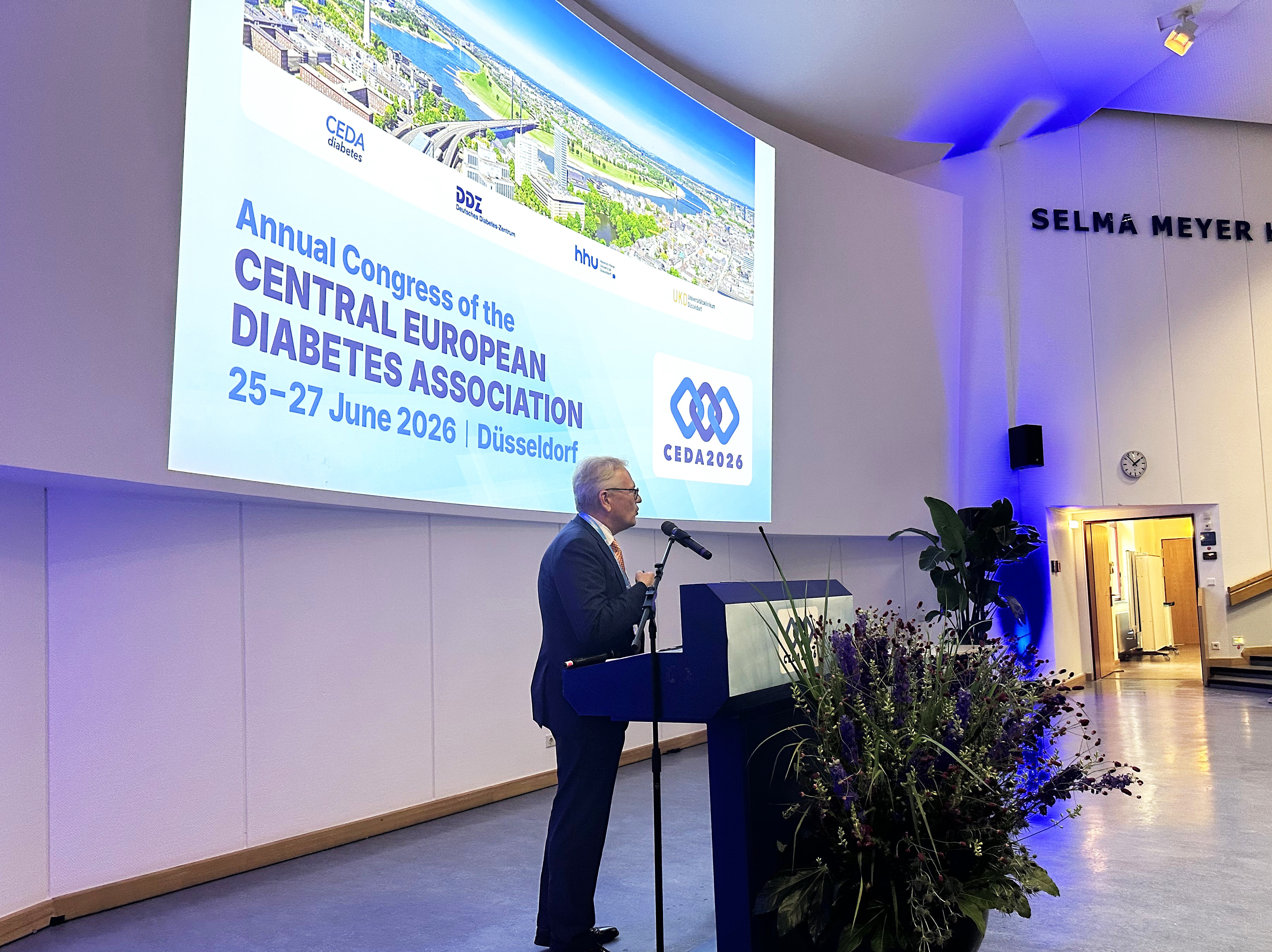 © DDZ | Fig. 1: Prof. Dr. Michael Roden, Congress President of CEDA 2026, welcomes attendees to CEDA 2026.
Precision diabetology as a guiding principle
Precision diabetology was the unifying topic of the three-day CEDA Congress. Increasing evidence shows that diabetes comprises different subtypes with distinct molecular characteristics, risks of complications and responses to therapy. "The more precisely we understand a person’s subtype of diabetes the better the management can be in the future. This may comprise more effective treatment, but also allows us to save resources within the healthcare system," emphasises Congress President Prof. Roden. The key task in the coming years will be to translate this knowledge into everyday clinical practice. "International organisations such as CEDA are crucial for understanding different care models ranging from Central to Eastern and South-Eastern Europe, for identifying best practice models as well as remaining gaps," explains Prof. Roden.
CEDA 2026 offered participants a total of 16 scientific sessions on topics of high clinical significance. Central topics included precision diabetology, the interaction between diabetes and cardiovascular disease, diabetes-related complications such as neuropathy and nephropathy, therapeutic innovations, obesity, diabetes technology, prevention through nutrition, physical activity and lifestyle interventions, as well as psychosocial aspects of diabetes care. Particular attention was devoted to the close relationship between type 2 diabetes and metabolic dysfunction-associated steatotic liver disease (MASLD). Of note, two sessions were designated to cardiovascular risks and complications in the context of diabetes, a special research area of Heinrich Heine University with its new CARDDIAB centre.
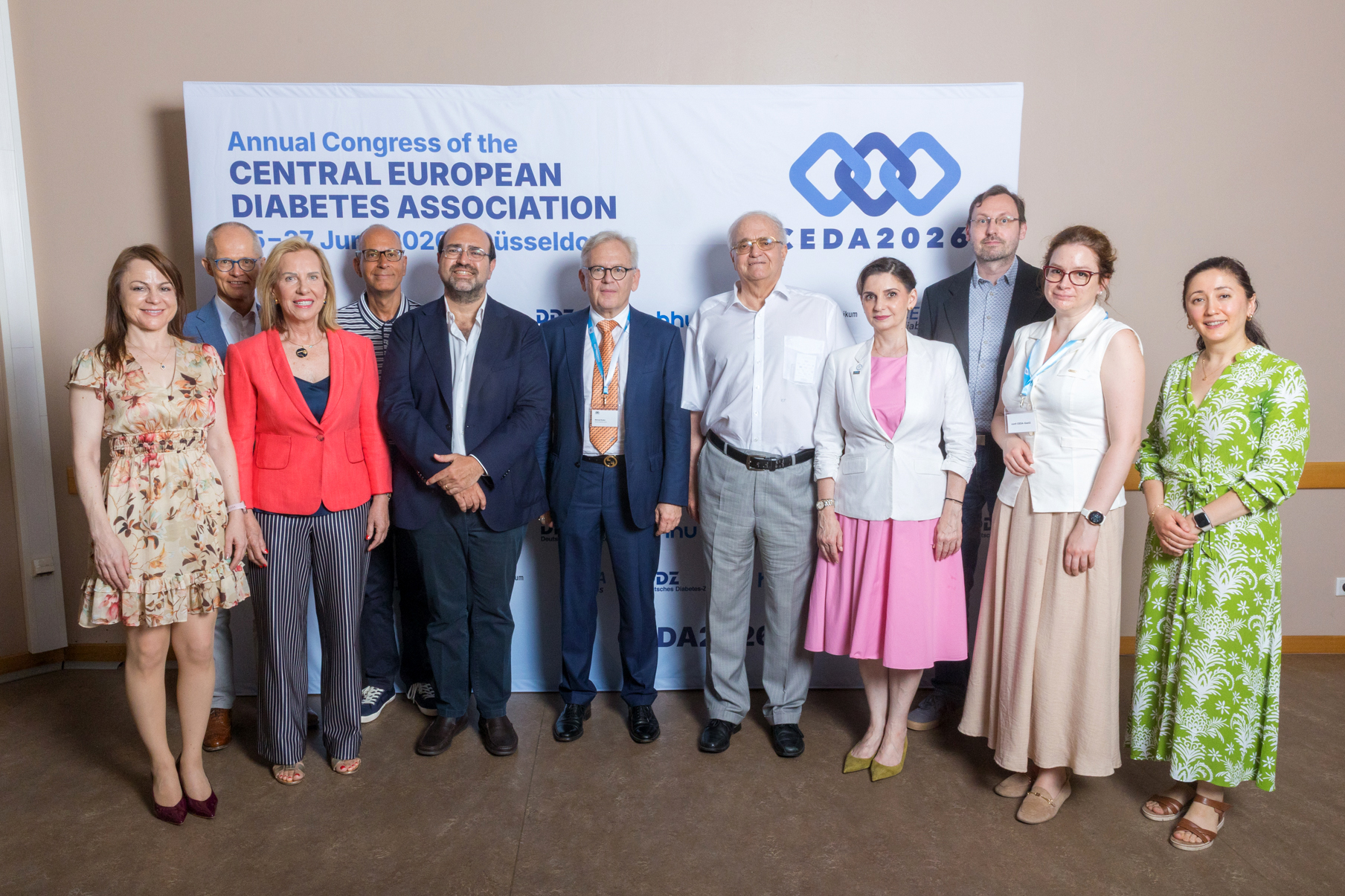 © DDZ | Fig. 2: Congress President Prof. Michael Roden, Past-President Prof. Péter Kempler, new CEDA President Prof. Manfredi Rizzo, and several CEDA Board Members.
Joint symposia strengthen European collaboration
International collaboration was one of the defining features of the meeting. A joint symposium with the European Association for the Study of Diabetes (EASD) brought together leading European experts. The symposium highlighted the pathophysiology of type 2 diabetes, the impact of obesity on development and progression of type 2 diabetes as well as chronobiology. Another scientific highlight was the joint symposium with the German Center for Diabetes Research (Deutsches Zentrum für Diabetesforschung, DZD) on innovations in diabetology.
Beyond these joint symposia, the congress included four industry-sponsored sessions that complemented the scientific programme by presenting recent developments in pharmacological therapies, diabetes technologies and emerging treatment strategies.
Supporting the next generation
Promoting young investigators has always been one of the missions of CEDA and also received particular attention at the Düsseldorf meeting. As a new congress format, two dedicated Young Investigator Sessions were introduced, providing early-career researchers from eight CEDA member countries with the opportunity to present their work and discuss their projects with internationally recognised experts.
Innovative studies were recognised through the CEDA Poster Awards, which were presented to the authors of the five best poster presentations. The awards went to researchers from Serbia, the Czech Republic, Hungary and Germany. To further encourage participation by young scientists, ten CEDA Travel Grants were awarded, underlining the association’s longstanding commitment to fostering the next generation of diabetes researchers.
The next CEDA Congress will take place in June 2027 in Riga, Latvia, under the presidency of Dr. Ilze Konrade, continuing CEDA’s tradition of promoting scientific exchange and collaboration across Central, Eastern and South-Eastern Europe.
First Jühling Prize awarded to Péter Kempler
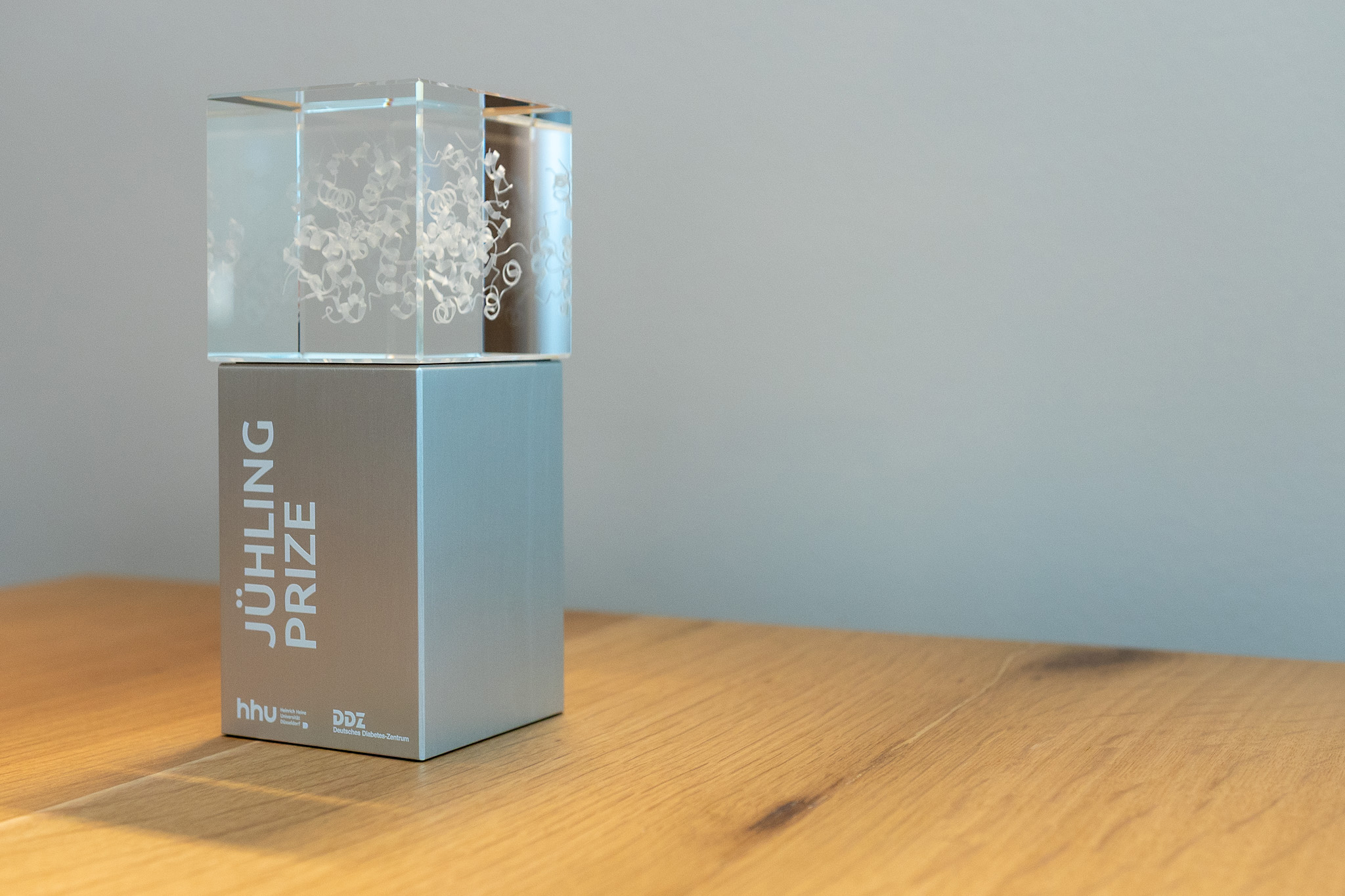 © DDZ | Fig. 3: The new Jühling Prize from the Anna Wunderlich and Ernst Jühling Foundation.
One of the ceremonial highlights of CEDA 2026 was the presentation of the first Jühling Prize by the Anna Wunderlich and Ernst Jühling Foundation to Professor Dr. Péter Kempler (Budapest, Hungary). The award recognised his outstanding research in the field of diabetic neuropathy over more than four decades. During the congress, Kempler also concluded his four-year term as CEDA President. At the General Assembly, he handed over the presidency to Professor Manfredi Rizzo (Palermo, Italy). Prof. Rizzo will serve as CEDA President for the next four years and continue to strengthen the association’s international scientific network and collaborative activities.The project-related Jühling Award for early-career researchers was presented to Dr. Sevgican Yilmaz (Institute for Clinical Diabetology, DDZ) and Nika Atanelov (Institute of Biochemistry and Molecular Biology I, UKD) for their project on the role of mitochondrial dysfunction in liver cells in the development of insulin resistance and type 2 diabetes.
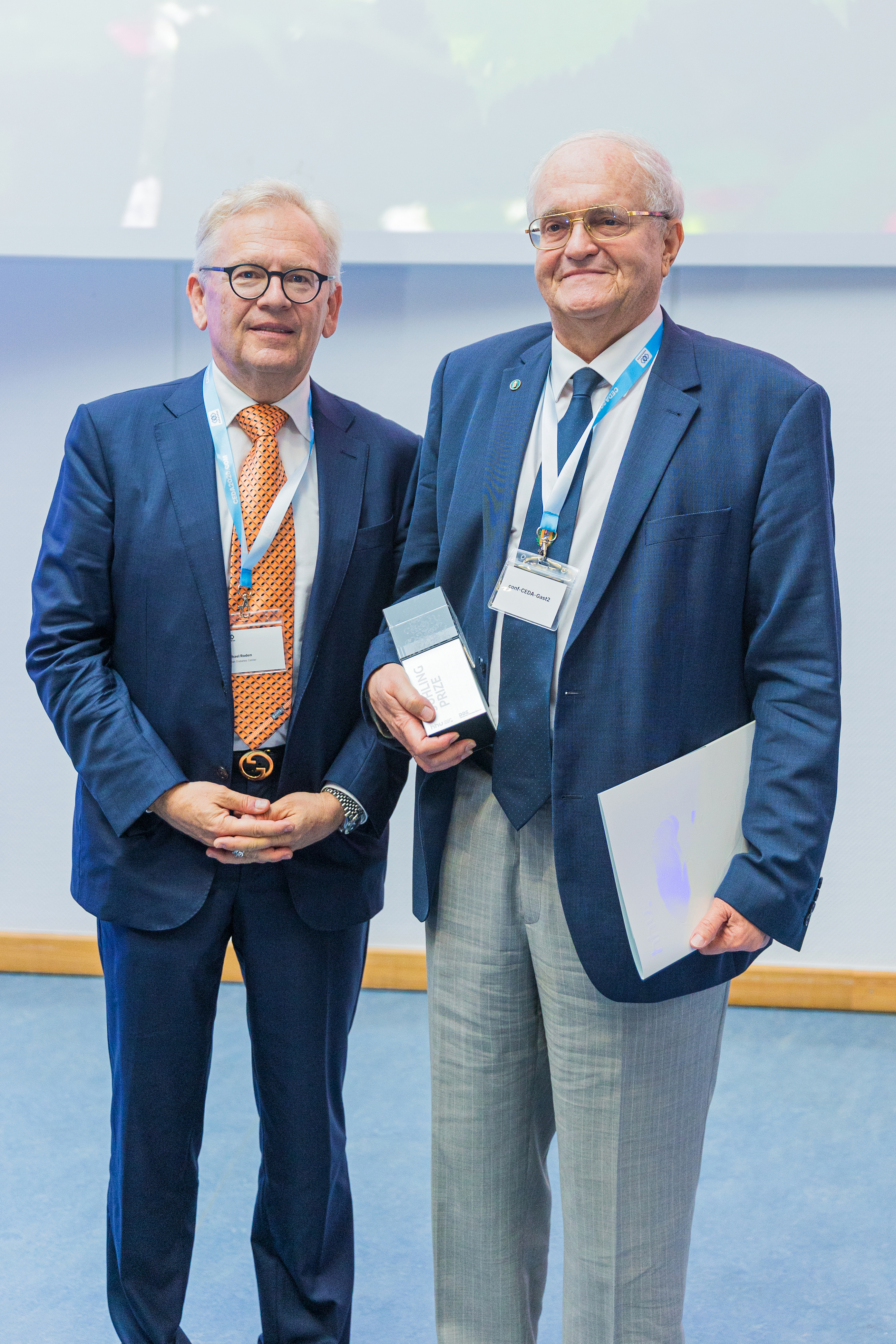 © DDZ | Fig. 4: Prof. Péter Kempler (r.), recipient of the Jühling Prize, and Congress President and DDZ Director Prof. Michael Roden (l.).
|
Erschienen in: Diabetes, Stoffwechsel und Herz, 2026; 35 (5) Seite 286-287